Equipment Guide
A decanter centrifuge is one of the most versatile pieces of separation equipment in industrial processing. Whether you're handling wastewater treatment, food processing, chemical production, or pharmaceutical manufacturing, choosing the right decanter can dramatically improve your throughput while reducing operational costs.
A decanter centrifuge operates on the principle of sedimentation using high centrifugal force to separate solids from liquids. The key components include a rotating bowl, a scroll conveyor (the "decanter"), and a differential drive system. The combination of bowl speed and scroll speed determines the separation efficiency and the dryness of the discharged solids.
1. Separation Performance (G-Force)
The G-force rating, typically ranging from 1,000G to 4,000G for standard decanter centrifuges, directly impacts separation efficiency. Higher G-force means better separation of fine particles but also higher energy consumption. For most industrial applications, 2,500G–3,500G strikes an effective balance.
2. Bowl Size and Throughput
Bowl diameter typically ranges from 200mm to 900mm. Larger bowls handle higher throughput but require more space and higher power. Match bowl size to your daily processing volume — oversizing leads to unnecessary energy costs, while undersizing causes maintenance issues from overloading.
3. Material Compatibility
The bowl and scroll materials must be compatible with your process media. Common options include:
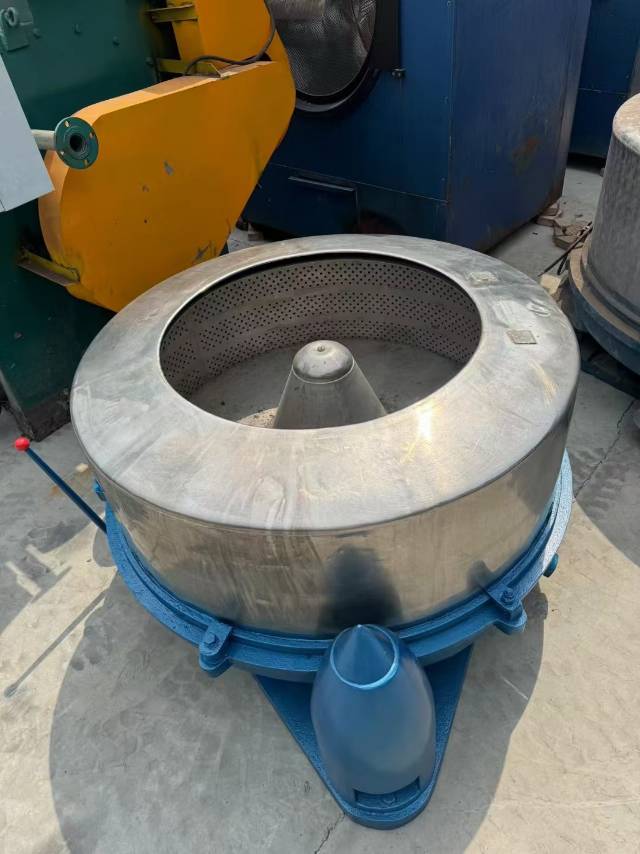
A well-maintained second-hand decanter centrifuge can deliver 80–90% of the performance of a new unit at 30–50% of the cost. The key is to verify the bowl's run hours, check the scroll differential wear, and request a performance test with your actual feed material when possible.
At CHENGHANG, all second-hand centrifuges undergo a rigorous 27-point inspection including bearing condition, bowl balance, scroll wear analysis, and gearbox oil quality assessment.
Proper maintenance can extend a decanter centrifuge's service life to 15–20 years:
CHENGHANG stocks over 200 used decanter centrifuges from leading brands including Flottweg, Alfa Laval, Pieralisi, and Andritz. Our technical team can help you select the right unit based on your feed characteristics, desired throughput, and budget.
Get a Free Quotation →