Complete Mineral Water Bottling Line: Process Flow and Equipment Checklist
Understand the complete mineral water bottling process, from source-water treatment and storage to bottle rinsing, filling, capping, labeling, packing and shipment preparation.
Building or upgrading a mineral water bottling operation is not simply a matter of choosing a filling machine. A reliable line is a connected process: water treatment, hygienic storage, bottle preparation, filling, capping, labeling, secondary packaging and final quality checks all need to work together. This guide explains the usual process flow and the information to prepare before sourcing a complete used bottling line.

1. Source water testing and treatment
The process begins with a clear understanding of the source water. Laboratory testing should identify mineral content, turbidity, microbiological condition and any treatment limits required by the destination market. Depending on the water source and product positioning, a line may include sand filtration, activated-carbon filtration, precision filtration, membrane treatment, ozone treatment or UV sterilization.
When reviewing equipment, confirm the design flow rate, tank materials, pump model, control system, pipework condition and whether filters, membranes or consumables will need replacement. Water-treatment capacity should be balanced with the actual output of the filling line, not selected in isolation.
2. Treated-water storage and hygienic transfer
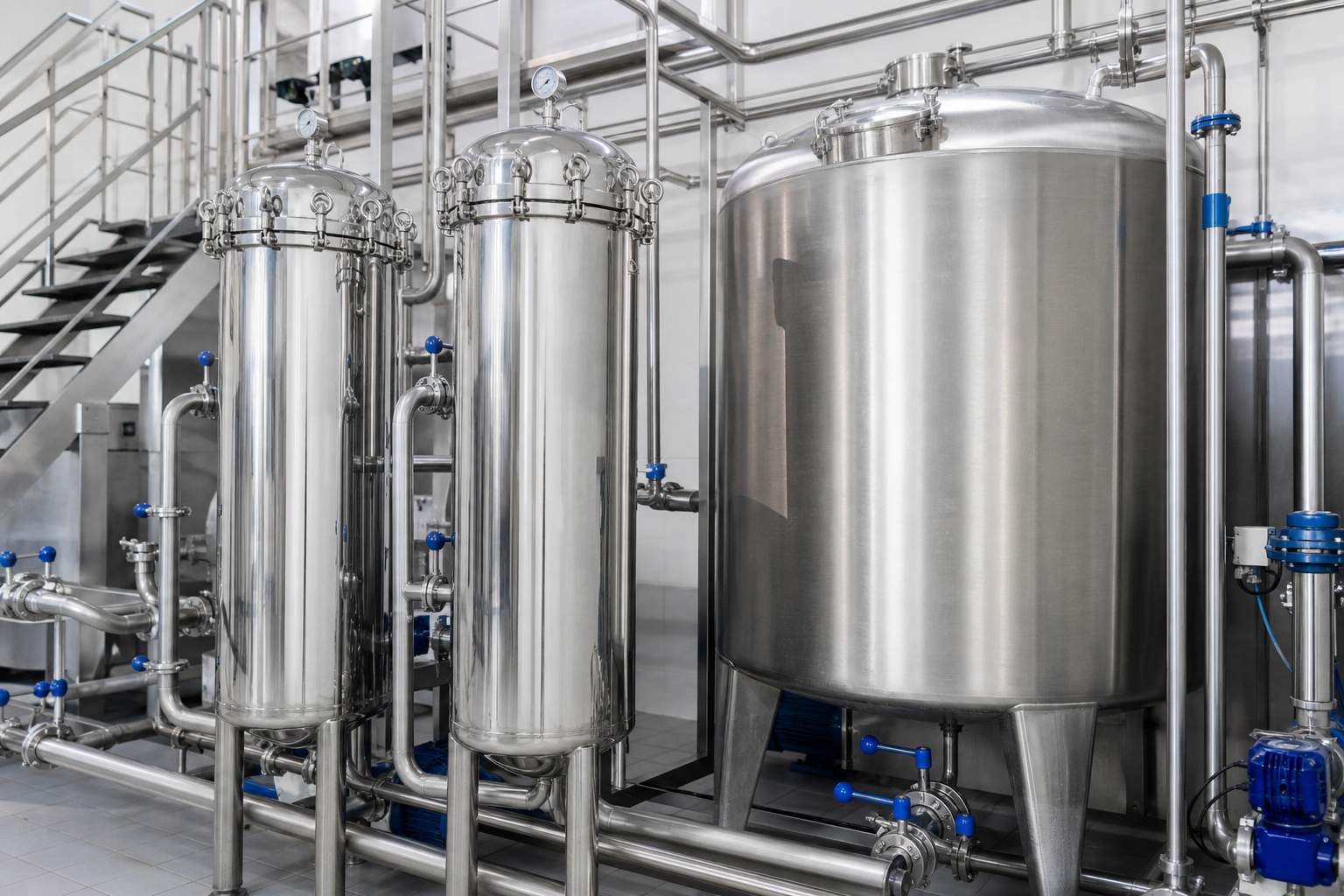
After treatment, water is normally held in a sanitary stainless-steel storage tank before it enters the filler. The tank, transfer pumps and connecting pipes should be designed to minimize contamination risk and allow cleaning. For used equipment, ask for current photos of internal surfaces, manways, spray balls, valves and the CIP connection points.
Key questions include the working volume, stainless-steel grade, insulation requirement, included instruments and whether the system has a documented cleaning procedure. A well-matched buffer tank helps the line continue operating smoothly when upstream treatment and downstream filling speeds differ slightly.
3. Bottle supply and air conveying
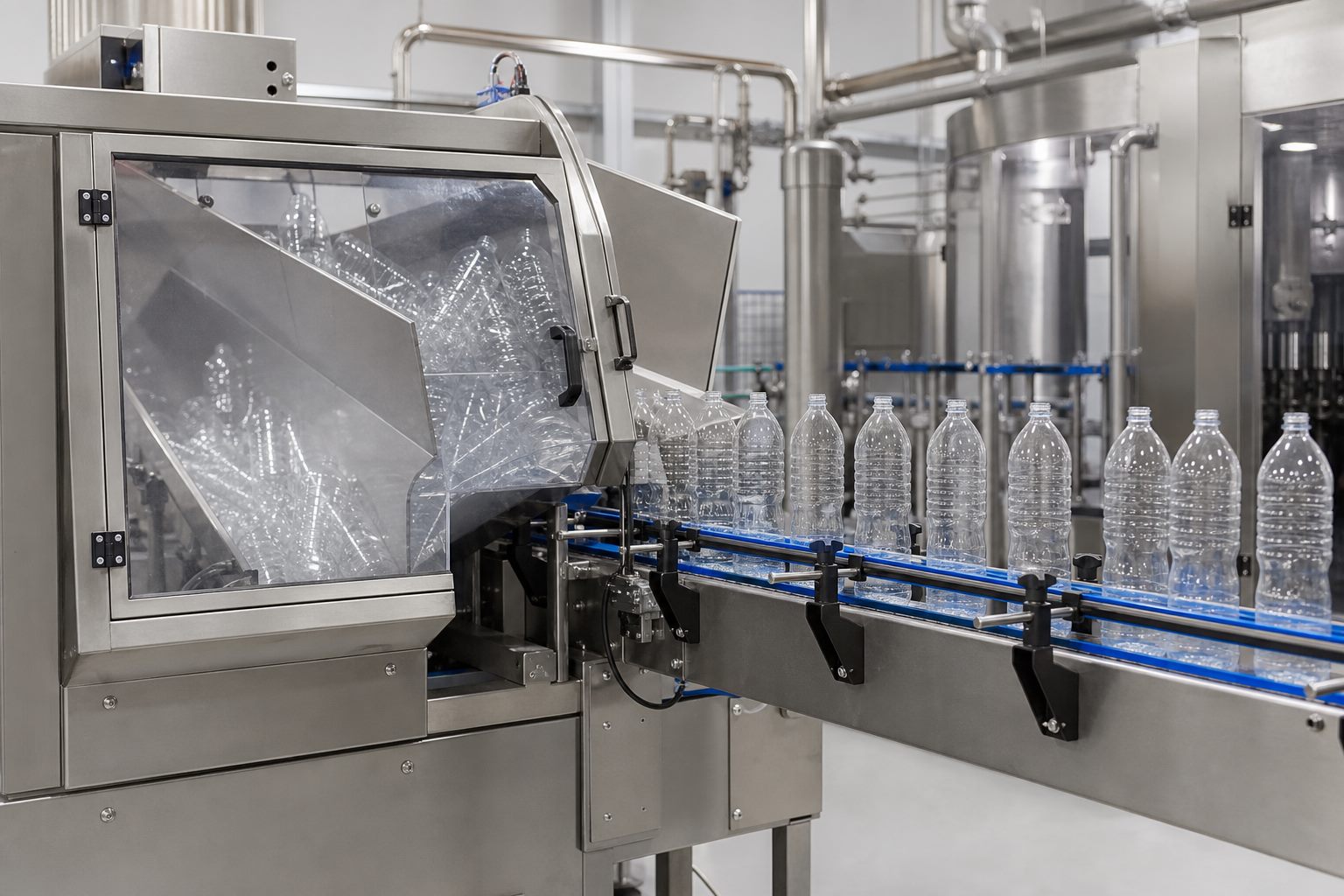
Most PET bottled-water lines start with either preforms and a blow-molding system or ready-made empty bottles. A complete project may include a bottle unscrambler, air conveyor and accumulation section before rinsing and filling. If you are purchasing a used line, clarify which bottle sizes and neck finishes the existing machine can handle.
Changing bottle formats can require guide rails, star wheels, molds or additional change parts. The most useful inquiry includes bottle volume, neck type, target bottles per hour and whether the bottles are supplied locally or produced in-house.
4. Bottle rinsing, filling and capping
The rinsing-filling-capping monoblock is the core of a mineral water line. Empty bottles are rinsed, filled to the specified level and immediately sealed with caps. Hygienic design, stable filling accuracy and a dependable capper are essential for consistent production.
Before choosing a machine, review the number of rinsing, filling and capping heads, rated output, supported bottle formats, cap type, electrical requirements and available control documentation. Ask for nameplate photographs and a recent operating video when possible. It is also important to verify whether the filler is suitable for still mineral water, carbonated water or another beverage type, as the filling technology is different.
5. Cap handling and date coding
A cap elevator or cap sorter feeds closures to the capper. After capping, a date coder can print the production date, batch number or other required traceability information. Confirm the cap specification and whether the existing cap feeder, chute and sorting system are included with the machine.
For export projects, buyers should also check whether local regulations require a particular date format, language, barcode or food-contact documentation for packaging materials.
6. Labeling, inspection and shrink packaging
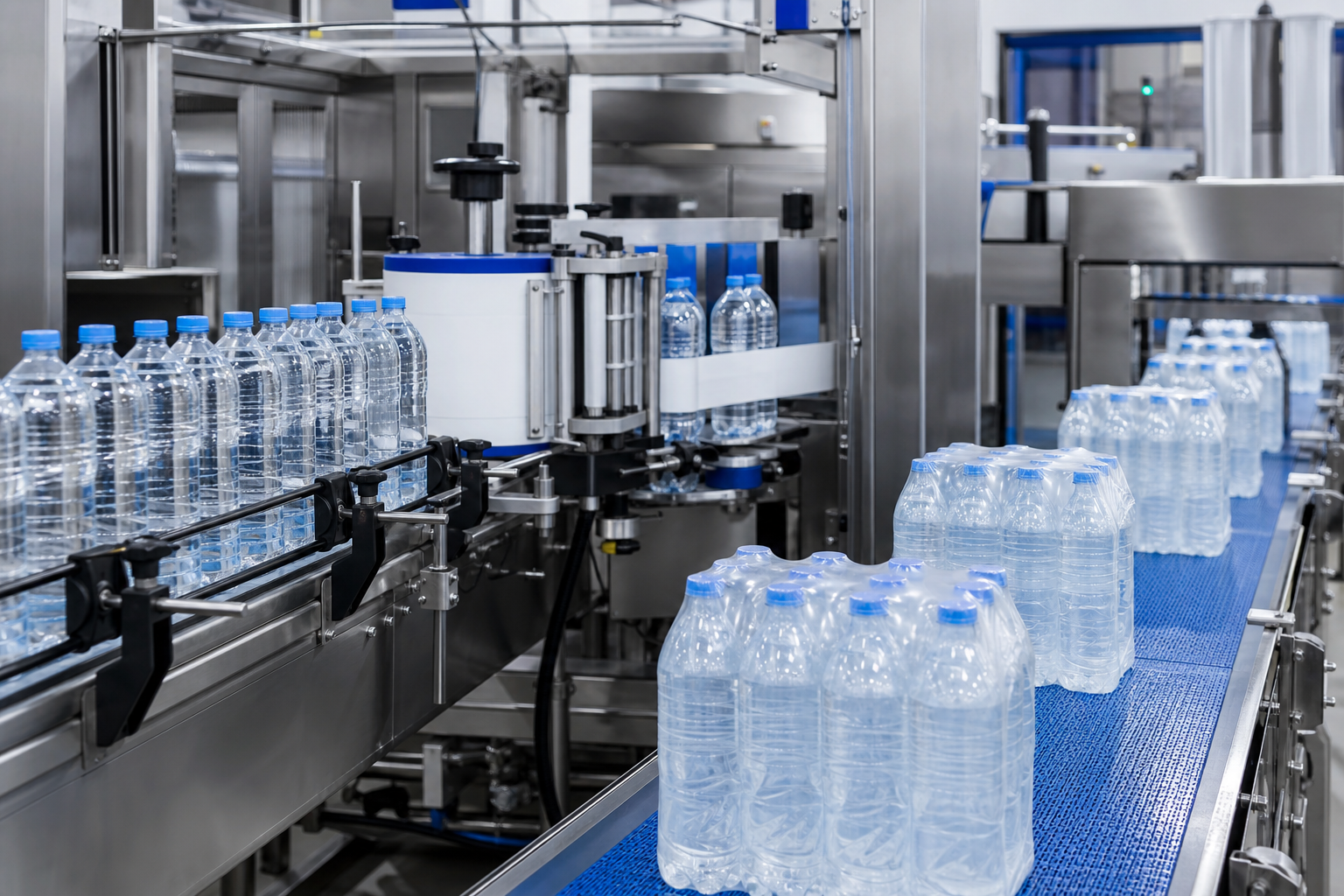
Once bottles are closed, they move through labeling and inspection. Depending on the package design, the line may use sleeve labeling, self-adhesive labeling or OPP hot-melt labeling. Typical inspection equipment includes fill-level checks, cap checks and visual rejection devices. Finished bottles are then grouped into trays, shrink film bundles or cartons for distribution.
When comparing used equipment, make a component list for conveyors, labeler, date coder, inspection units, shrink wrapper, carton packer and palletizing equipment. Missing auxiliary machines can affect line efficiency even when the filler itself is in good condition.
7. CIP, utilities and installation planning
A practical project plan also covers clean-in-place equipment, compressed air, water supply, drainage, electrical power and workshop layout. The equipment footprint, floor loading, access for maintenance and loading method should be confirmed before shipment. Large tanks, conveyors and fillers may require container loading plans or special transport arrangements.
For a used mineral water bottling line, request overall dimensions, weights, dismantling photographs, electrical diagrams and a list of loose accessories. This information helps estimate freight, customs preparation and installation work at the destination.
What to include in your inquiry
To receive a useful quotation, provide your desired bottle size, target output, water type, cap and label format, destination country, preferred condition and any required ancillary equipment. Browse available used industrial equipment, then send Chenghang Group your process requirements and destination country so we can check suitable stock and discuss the components needed for your project.
Frequently asked questions
What equipment is included in a complete mineral water bottling line?
A typical line can include water treatment, hygienic storage, bottle supply, rinsing, filling, capping, date coding, labeling, inspection, conveyors and shrink packaging. The exact configuration depends on bottle size, output and local requirements.
What information is needed to quote a used mineral water bottling line?
Share bottle size, target bottles per hour, water type, cap and label format, destination country, preferred condition and any required auxiliary equipment.
How should a buyer assess used bottling equipment before export?
Request current photos, operating video, nameplate details, dimensions, weights, included accessories and known condition notes. Confirm loading and installation requirements before shipment.
Looking for similar equipment?
Send us the equipment type, process requirements and destination country for a current availability check.
Request a Quote